


Article published on 5 September 2019
Introducing our expert play development tips to get the best out of your play facilities.
As any parent will testify going away with your family is a happy occasion. However, it is also one where you want to ensure your children are entertained to guarantee you have a good break as well. Providing high-quality outdoor play facilities has therefore become a necessity for many holiday parks and campsites in the UK to satisfy family needs.
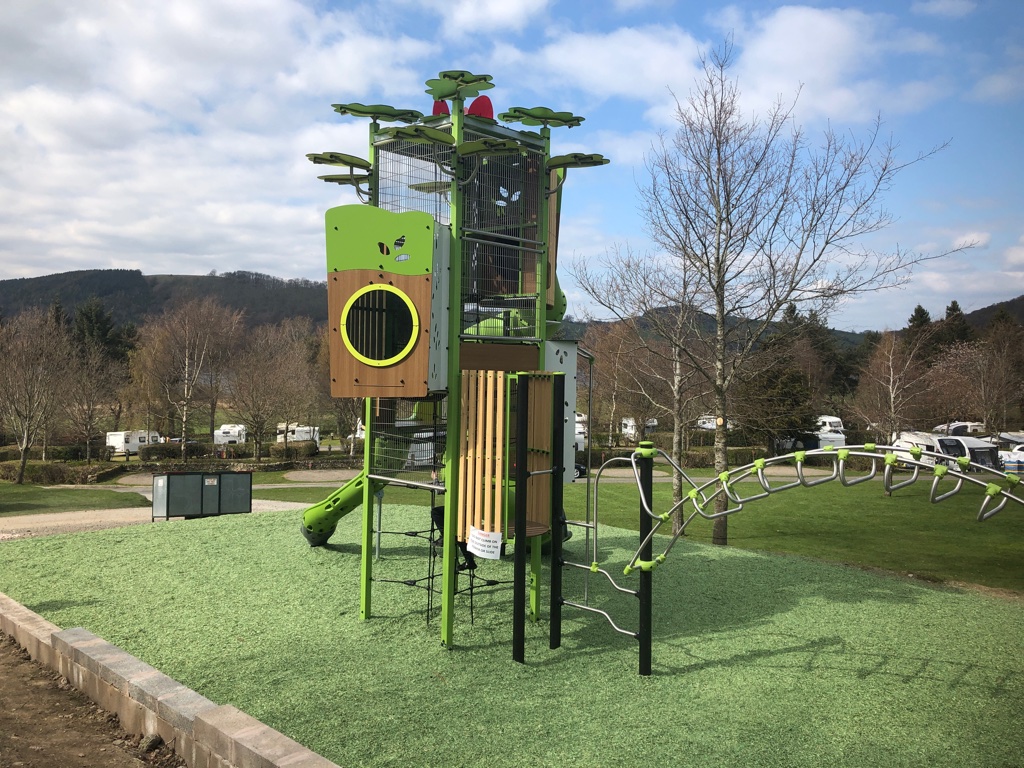
As one of the leading providers of outdoor play and sports equipment in the UK – here are our top play development tips:
1. Ensuring Easy Supervision
Try and install any new play areas near-site reception areas to allow natural supervision or near cafes and other amenities. This can also increase spend as parents sit down for lunch/dinner while watching their children play.
2. Design is everything.
It sounds simple but the more attractive the play area, the more likely it is going to be used. If the equipment looks good but is also challenging, offering some risk – children are more likely to go back to it time and time again to use it. If you have any local culture or history then why not incorporate this into the play area design and add some themed equipment. For example, if you are by the sea, you could have a sea/aquatic theme with a pirate ship or lighthouse. This allows more play value beyond just the equipment as children can also role-play.
3. API Trusted Companies
Use an API (Association of Play Industry) affiliated company to ensure you get the best and most reputable service. All companies will be fully aware of current standards and can design and install the area– adhering to all safety guidelines – taking out any worry you might have if you tried to do this yourself.
4. Think about accessibility.
All play equipment now installed should consider offering inclusive elements so children of all ages and abilities can play together. The government is keen to push this through their recent Tourism Deal document.
5. Risk is important.
Children need risk in play to make it exciting and challenging for them. It’s important to have tall or challenging play equipment. Having this type of equipment does not necessarily mean more injuries or danger. Providing clear signage is installed citing appropriate age groups, and safety surfacing are down – this type of equipment is often what creates the ‘wow’ factor for you. Don’t be afraid of it and seek advice from the play company if you are ever worried.
6. Think about your age groups.
Different age groups need different types of equipment. There is not a one-size-fits-all here. It’s probably good to provide a little something for everyone. Look at providing equipment for 0-5-year olds, 6-12 years and then 13 years +. You can even install outdoor fitness equipment as well which caters to adults. These can be placed next to a play area so the adults can work out while the children play. Having these set out in clear and defined zones/areas is always key with signage denoting the correct age group for the equipment. This should prevent injuries from occurring.
Looking for More Play Development Tips or a FREE Site Survey?
Our team can offer best practice advice and design your area to help develop your play facilities. Please contact 0115 982 3980 or email [email protected] to arrange your appointment.
More advice from experts
Understanding Children’s Development: From Their Needs to Thoughtful Play Design
Article published on 23 November 2026
A well-designed playground is much more than a collection of swings, slides and climbing frames. It is a space where children develop essential life skills, build confidence, form friendships and explore the world around them. But how can we ensure play spaces genuinely support children’s changing needs as they grow? Understanding Child Development Through Play...
You Know Your Pupils. We Know Play. Creating Inclusive Spaces Together.
Article published on 18 November 2026
Supporting SEND schools with over 35 years of inclusive play design expertise. Every SEND (Special Educational Needs and Disabilities) school is different, and so are the children who attend them. Across the UK, specialist educational settings support pupils with a diverse range of physical, sensory and cognitive needs, each requiring an environment that reflects their...


