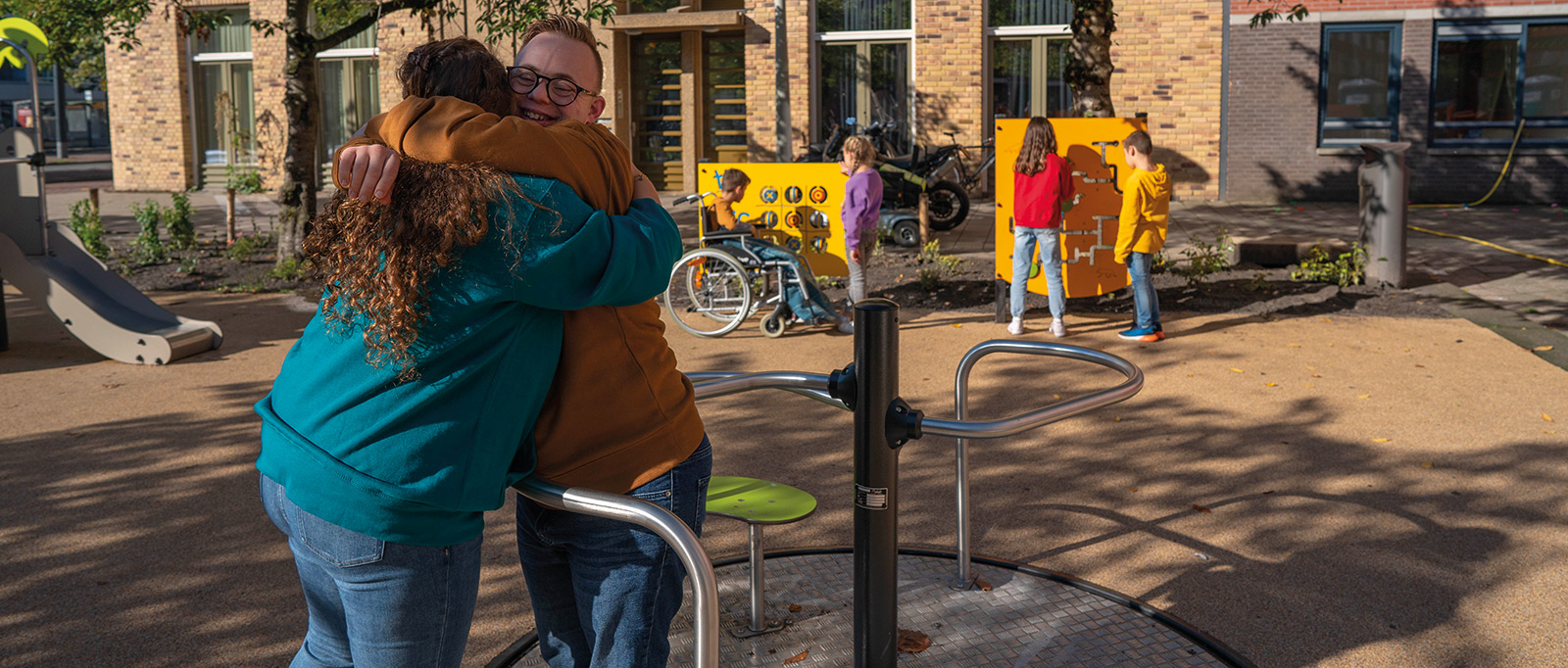


How to choose inclusive play equipment for children with intellectual disability or neurodivergence
1 – Understand their needs
Children with intellectual disability or neurodivergence may:
- Experience difficulty learning new tasks
- Be sensitive to sensory input such as noise, light or colour
- Need support to engage in a group or social play
- Develop physical and cognitive skills at different rates
2 – Support their needs
Inclusive playspaces should offer:
- Simple, engaging activities that promote confidence
- Sensory stimulation in a controlled and calming way
- An environment that feels familiar, safe and predictable
- Designs that allow for close supervision or carer involvement during play
3 – Inclusive design solutions
- Play structures with clear, simple forms and soothing colours
- Well-defined activities with a single focus (one activity per play element)
- Play features with gentle, calming movement to support emotional regulation
Examples of inclusive play equipment for children with intellectual disability or neurodivergence
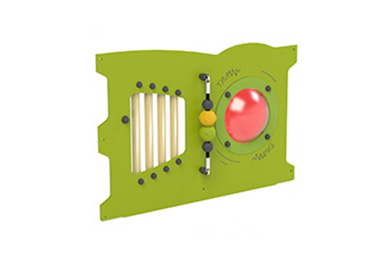
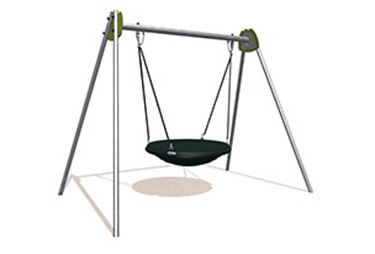
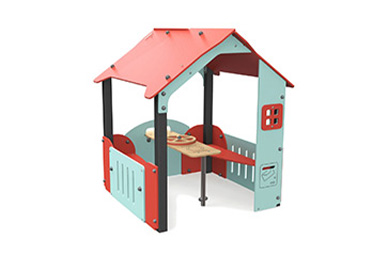

Our inclusive design solutions include:
- Logical layout: Clear paths that support relaxed and confident movement
- Quiet zones: Separate spaces for rest and self-regulation
- Visual cues: Contrasting floor colours or textures to aid orientation
- Easy access to play equipment so that carers can provide assistance quickly if needed
- Structures with appropriate heights, shapes and challenge levels to encourage independence


